Kawai K5000s Review: Additive Sound Morphing
– 8 min read

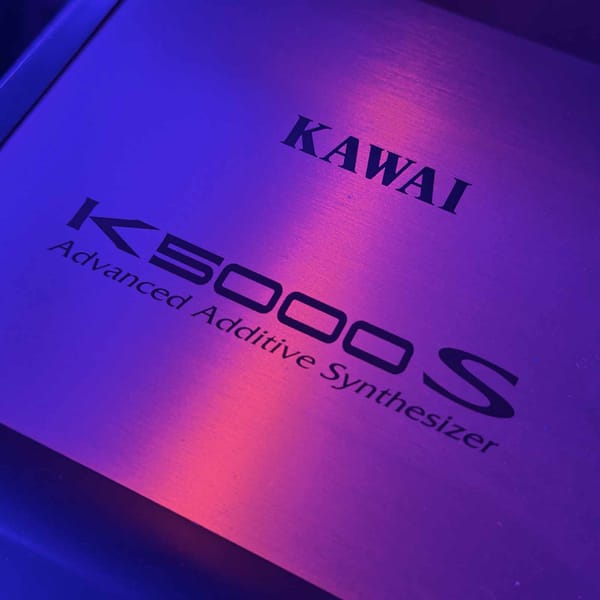
After 15 years with my very first synth, Kawai K5000s I've come to understand why it is one of the most sonically distinctive instruments ever manufactured for evolving, morphing and harmonically complex synthesis. Funny enough, despite the deep, esoteric programming angle, I got mine for absurdly low prices because the previous owner had no idea what it was and how to use it.
I can characterise Kawai K5000s' distinctive sonic signature as instant Carbon Based Lifeforms - gorgeous ethereal ambient soundscapes with constantly evolving timbres. The mathematical precision of additive synthesis produces a distinctive digital character with a delicious texture that runs through everything it produces. The ability to add or remove partials in non-real-world configurations distinguishes the K5000 from acoustic modelling, allowing for impossible timbres that exist only in the digital realm. A single note from a well-programmed K5000 patch contains more harmonic information than many sample-based instruments. Despite the above comes interesting fact - this synth technically killed Kawai’s synth division: it was a huge R&D bet on advanced additive at workstation prices that never really sold, after which Kawai effectively exited the synth market to focus on pianos.
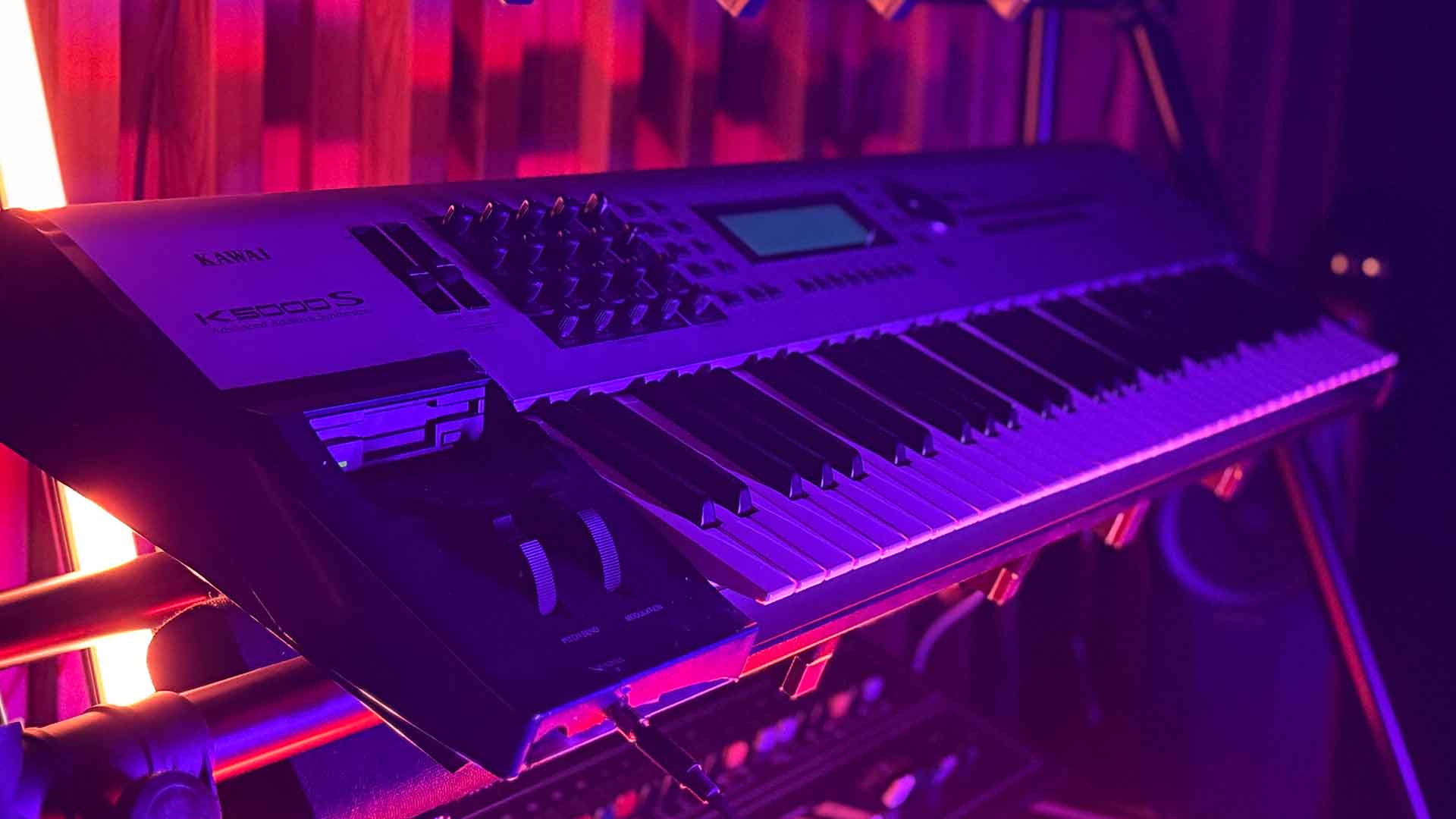
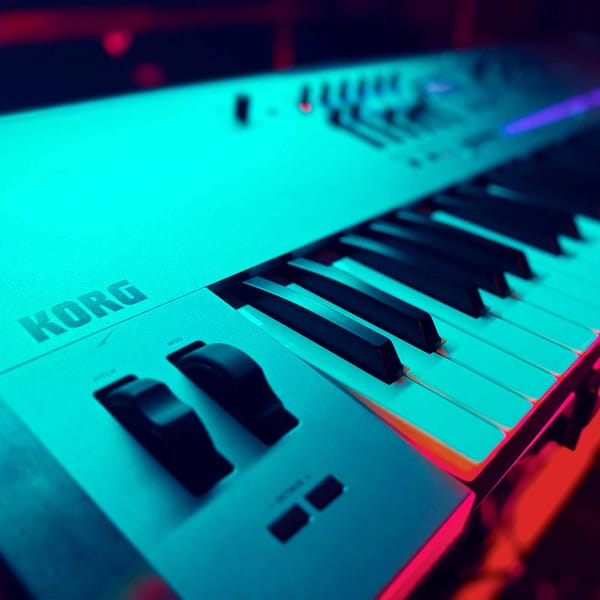
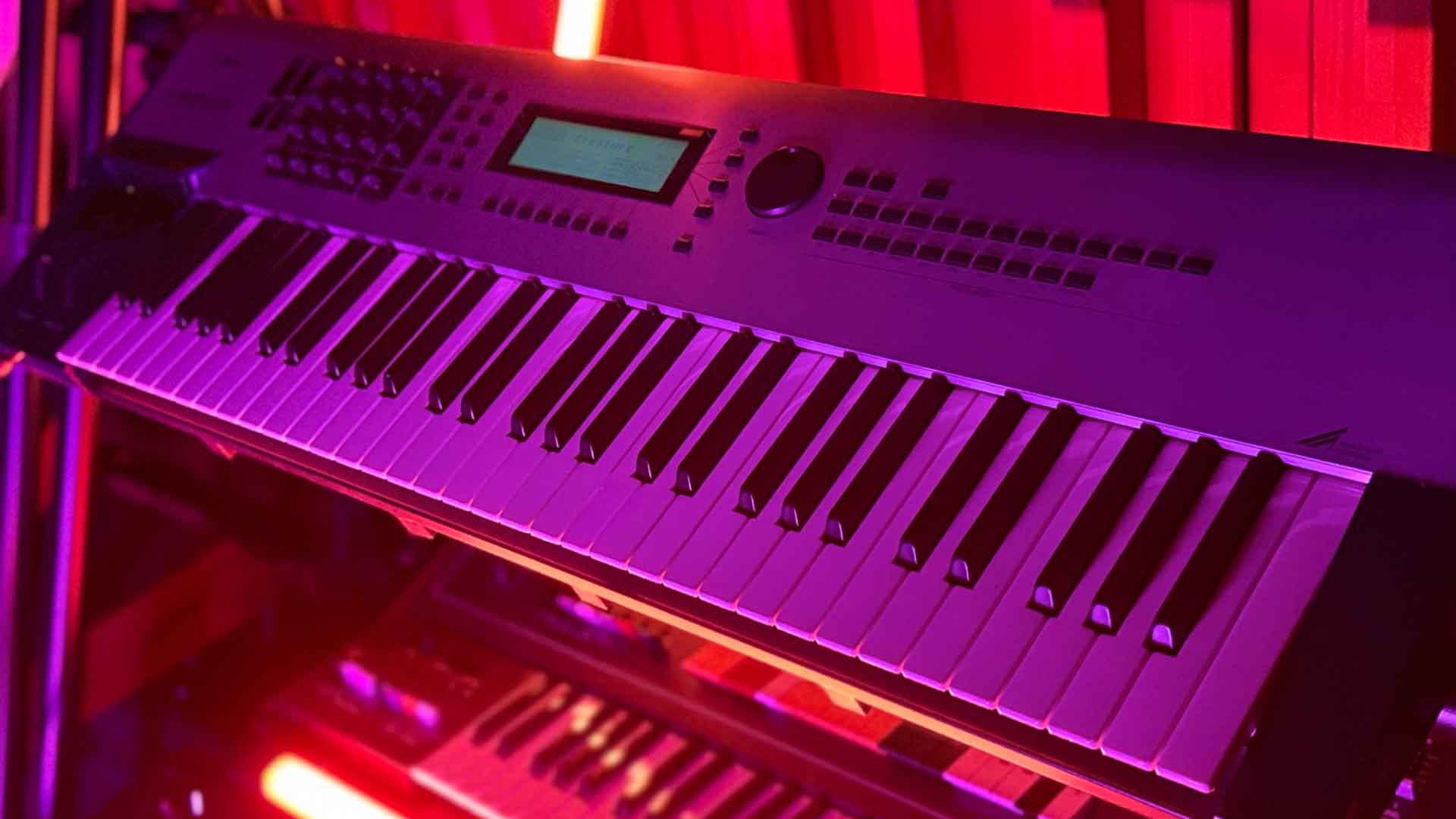
The K5000 S impresses with its physical presence - brushed aluminum construction, a massive backlit LCD display, and a robust build quality. The 61-note keyboard features velocity and aftertouch, that feels amazing to my taste despite keys being a bit narrower than other keyboards. I might be biased as I used it as a MIDI controller for other instruments for ages - but the keybed is something I really like about it.
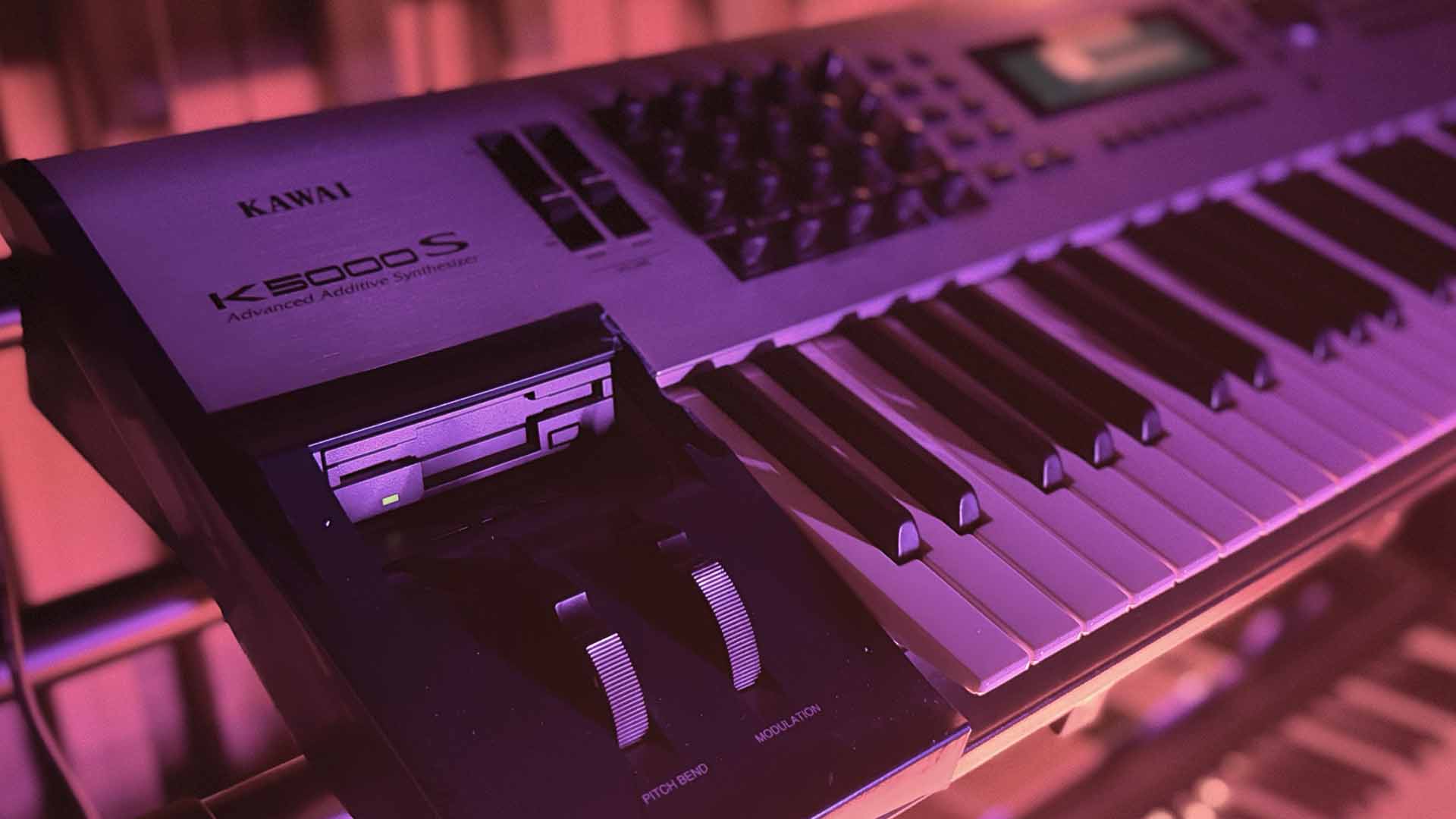
The front panel layout balances complexity with accessibility: three switches above the pitch and modulation wheels include two programmable controls plus one dedicated portamento activation. Two programmable footswitch sockets supplement the standard sustain and volume pedal inputs. The sophisticated 40-pattern arpeggiator (with eight user-programmable patterns) includes dedicated front-panel controls for Pattern, Mode, and Speed on the S version.
K5000 S's architectural philosophy is different than most of the mainstream synthesizers: unlike subtractive synthesis that carves away from complex waveforms, additive synthesis builds sound from individual sine wave components - up to 64 harmonics per source, with each harmonic possessing its own four-stage loopable amplitude envelope. The synthesis engine divides these harmonics into two groups - harmonics 1-64 and 65-128 - requiring two sources if you want access to the full spectrum. The higher bank (65-128) proves particularly valuable for metallic and inharmonic textures.
As it often happens to the synth presets, the most compelling sounds require extensive programming from scratch or at minimum substantial modification. The original Wizoo programming guides (available as PDFs in various online archives) emphasize workflow strategies: find a sound close to your target, then tweak (avoid building from scratch - it's very time consuming in additive synthesis). Users can adjust partials in groups - odd or even harmonics, octaves, fifths, high or low groupings - making complex programming more manageable than editing 64 individual harmonics. The dot notation beneath affected harmonics in the display provides visual feedback about which partials are selected for editing.
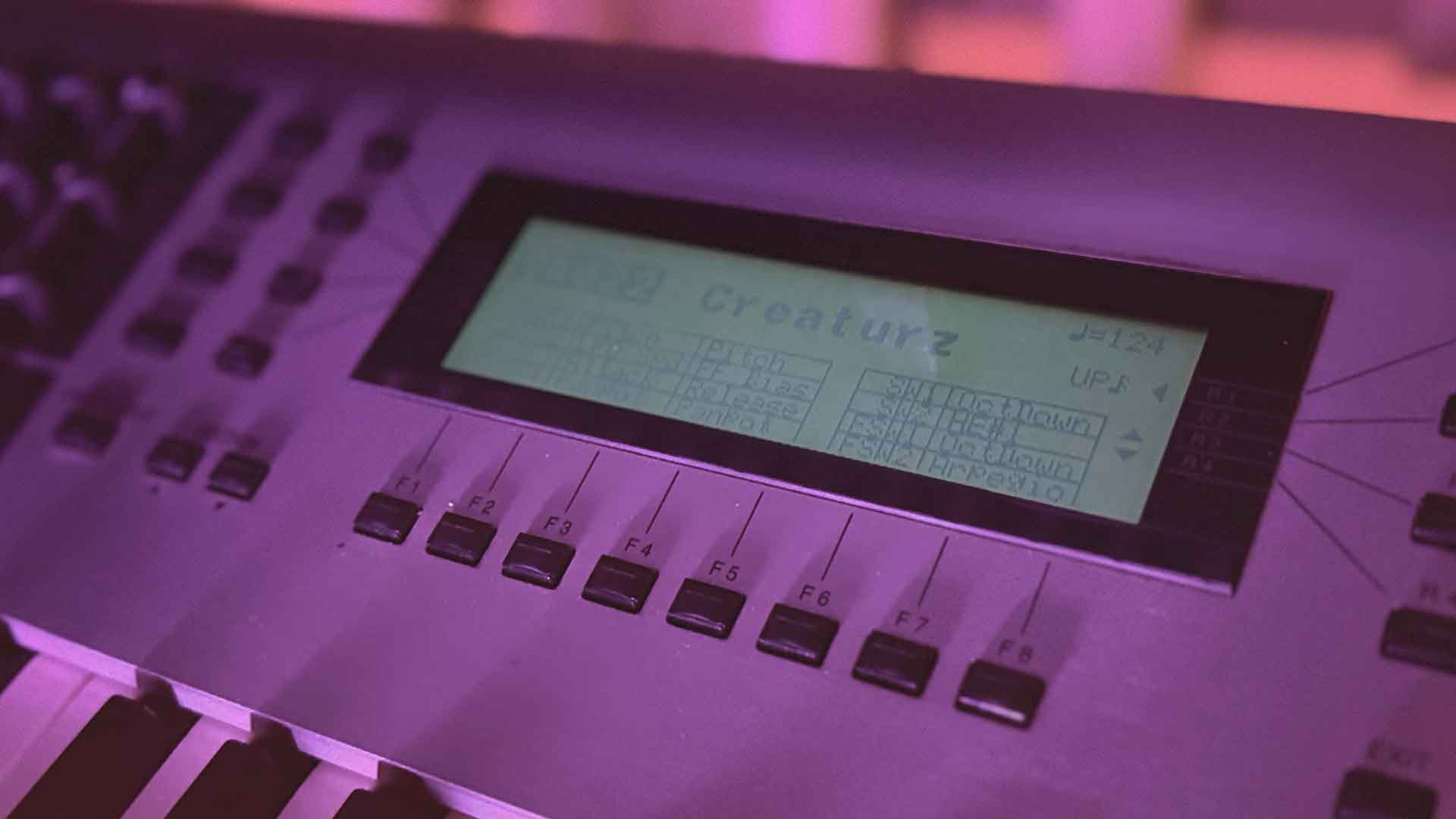
The morf function deserves special attention as a programming shortcut. This feature allows you to specify four different harmonic series (each with soft and loud versions) from any patch or source, then automatically interpolates between them with specified timing intervals. The K5000 generates all 64 harmonic envelopes automatically based on these four snapshot phases, creating smooth transitions between different spectral configurations. I typically morph first to establish the broad evolution, then manually edit individual harmonic envelopes for refinement.
Kawai K5000s is not the only additive synth in the market, but I keep it for the 128-band formant filter - essentially a 128-band graphic equalizer with one band per semitone. Unlike traditional filters that broadly shape frequency response, this formant filter performs surgical frequency sculpting, enabling precise harmonic reshaping impossible with conventional filtering. What makes the formant filter powerful is its own envelope generator and LFO modulation capabilities, allowing the frequency response to morph dynamically over time. It gives phenomenal control over sound, capable of simulating physical characteristics of acoustic instruments - the body length of a flute, the resonance of guitar strings - or creating pseudo-melodies through radical sweeps across the frequency spectrum.
The filter can be edited in groups ranging from graphic EQ (all bands), 20-band, 15-band, 10-band, 5-band, or individually. This grouping concept mirrors the harmonic editing philosophy: start broad to rough out the shape, then use narrow groupings for surgical precision. Formant filter tweaks affect partials directly when they match the frequency of a particular formant filter band, creating complex interactions between the additive sources and formant shaping.
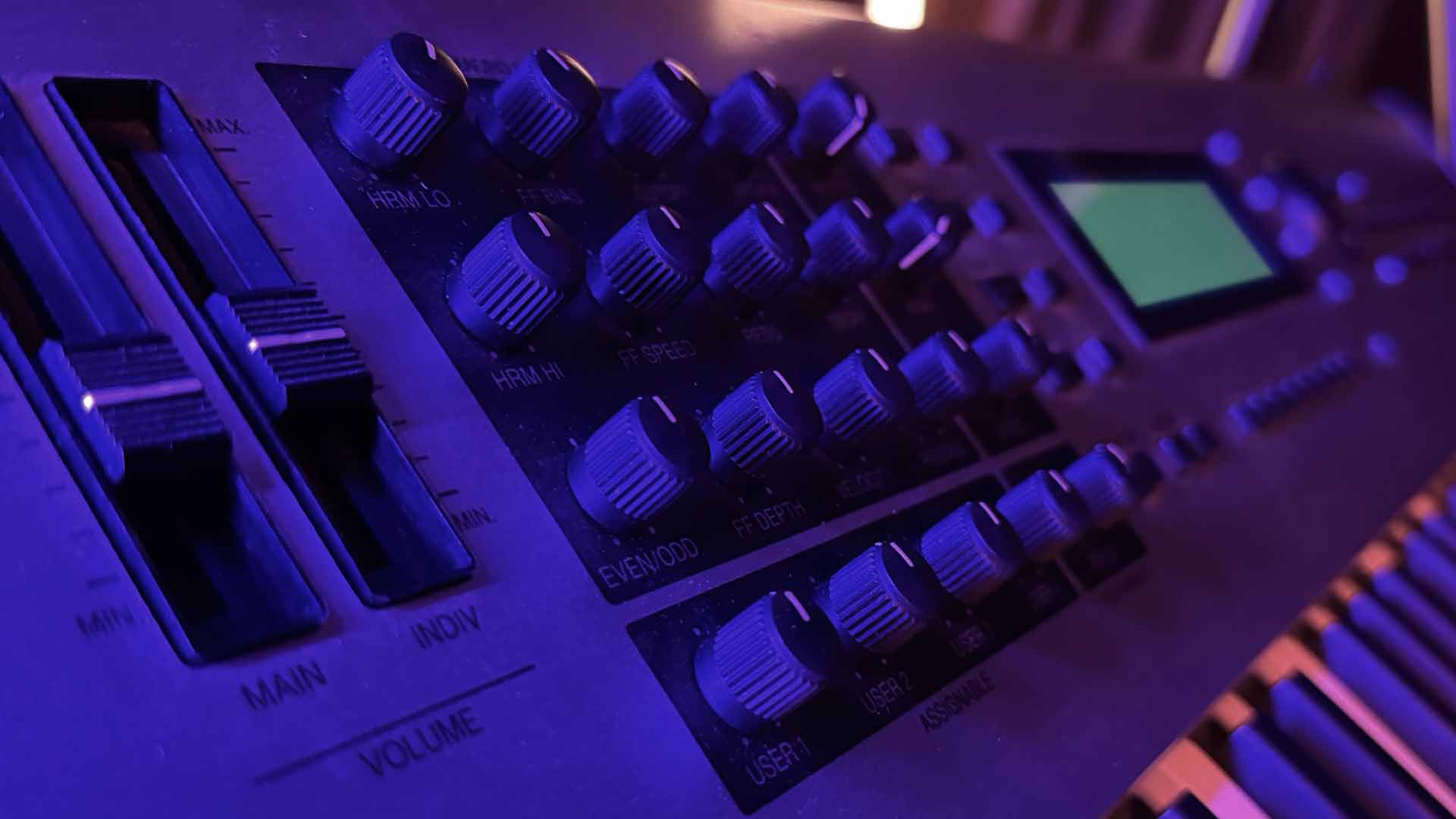
The K5000 S distinguishes itself from the K5000W and K5000R through its 16 physical macro control knobs - the only version of the K5000 family with dedicated real-time controllers. These knobs provide immediate access to critical parameters: formant filter bias, formant filter speed, formant filter depth, cutoff, resonance, velocity sensitivity, attack, decay, release, high harmonic mix, low harmonic mix, and even/odd harmonic mix. Four knobs are user-assignable to control parameters like formant filter envelope depth, LFO depth, or specific harmonic groupings. These macro controls transmit over MIDI, meaning movements can be recorded into a sequencer for precise playback - crucial for capturing spontaneous discoveries during sound design sessions.
For meditative ambient music, the K5000 S reveals itself as something approaching ideal. The synthesis method excels at producing deep ambient drones, and slowly morphing textures with complex harmonic relationships - with no external processing, featuring long-evolving pads and continuously shifting timbres.
The ability to create sounds that morph and develop over extended periods makes the K5000 exceptional for compositions requiring sustained evolution without repetition. Using the harmonic envelope looping and formant filter modulation, patches can be designed to cycle through spectral changes on timescales measured in minutes rather than seconds. And the K5000's bells and glassy leads provide punctuation in ambient compositions, cutting through dense pad textures. The formant filter's speech-like qualities can introduce subtle vocal characteristics into drones, creating human presence without using samples - valuable for spiritual ambient contexts.
The modern wave of new age music is less interested in 1980s pan flute clichés and more focused on immersive sonic environments - finds a powerful ally in the K5000 S. The instrument's capacity for "otherworldly timbres" and "alien voices" through formant filtering aligns perfectly with contemporary new age's exploratory aesthetic.
Psybient and psychill demand sonic complexity, timbral evolution, and sounds that reward deep listening - precisely the K5000's strengths, and based on my observation of more than a hundred synthesizers, such sounds simply aren't possible with other synths. This uniqueness proves invaluable in psybient where fresh sonic palettes distinguish productions. The K5000's weird character - neither warm analog nor cold digital in conventional senses - occupies a third category particularly suited to psychedelic contexts. The formant filter's ability to create flanging and resonance effects through harmonic manipulation produces subtle psychoacoustic phenomena. When formant filter bands are configured to emphasize specific frequency relationships, they can create beating patterns and difference tones that enhance psychedelic qualities without extra effects processing.
For psybient's bass requirements, the K5000 can produce nice acid bass (not worse than TB-303) and techno sounds. The combination of low-frequency additive sources with aggressive formant filtering and the overdriven digital filter creates bass tones with complex harmonic movement - basses that actively evolve. The ability to modulate individual harmonics with velocity means bass lines can develop into full-spectrum events during accent notes, a technique particularly effective in psybient's dynamic arrangements.
The K5000's PCM sources can provide attack transients for plucked and percussive sounds, layered with additive sources for the sustain and decay portions. This hybrid approach creates instruments that feel simultaneously familiar and alien - percussive elements with recognizable attacks but sustains that morph into unexpected spectral territories.
For game music and original soundtracks, the K5000 S offers several distinct advantages. Its unique sonic signature, unchanged since 1996, provides instant period authenticity for projects set in or referencing the late 1990s. More importantly, its capacity for supernatural sounds makes it valuable for science fiction, horror, and fantasy soundtracks.
The formant filter's speech synthesis capabilities enable creation of robotic voices, creature vocalisations, and valley effects without sampling. By carefully programming formant peaks to approximate vowel formants, then modulating these peaks dynamically, composers can create everything from android speech to fantasy language incantations. The mathematical precision of additive synthesis prevents these from sounding natural: an advantage when scoring non-human characters or entities.
Critically for game music production, the K5000's sounds remain distinctive even when heavily compressed or converted to lower-quality formats. The harmonic richness survives audio degradation better than some sample-based timbres, ensuring the composer's intent translates across different playback systems - from high-end studio monitors to Nintendo Switch speakers.
The K5000 S demands investment beyond financial cost - time, and patience to think about sound in architectural terms. The factory patches, while including some gems, mostly serve as starting points or demonstrations of capability rather than production-ready sounds. Sound Diver, the preferred editor, is an old-interface abandonware, though it can run on Windows in compatibility mode (or on a virtual machine with older OS) - and it's important for serious K5000 work.
Firmware version matters more than I originally expected. The K5000 S shipped with different OS versions (3.0, 4.0, 4.04), each including unique factory patch sets with different timbral characteristics. That's why sometimes our K5Ks do not sound the same - starting points for programming are different.
The floppy disk drive, while functional, represents a bottleneck for modern workflows. The more common approach involves using SysEx transfer via MIDI, bypassing the floppy drive entirely for patch management. Various utilities exist for converting between the K5000's proprietary .KAA and .KA1 file formats and standard SysEx files.
The online K5000 community, while small, maintains active knowledge sharing. The Eat at Joe's K5000 message board archives (preserved on various websites) contain years of programming techniques, patch analysis, and troubleshooting advice. Reddit's synthesizer community occasionally surfaces K5000 discussions, typically from users experiencing their K5K moment and seeking examples of usage. Facebook groups dedicated to the K5000 series provide contemporary support, though much less active than during the instrument's production years.
I love the synth and will keep it forever: my initial struggle with the interface, eventually broke through many years ago, and I got used to its sounds unavailable anywhere else. Despite my love, I wouldn't recommend it for the production studios - it doesn't provide great time-to-result ratio.
In fast world of 2025, modern software additive synthesizers like discoDSP Vertigo offer vastly more partials (256 versus 64), visual spectral editing, re-synthesis capabilities, and none of the menu diving. Image-Line Morphine, Native Instruments Razor, and the additive components of Apple Alchemy (formerly Camel Audio Cameleon 5000 - note the name) provide additive synthesis without hardware maintenance.
Yet the K5000 hardware retains relevance precisely because of its constraints and character. The limited parameter access raises the cost of endless tweaking, you think more about "How I can use this sound". See what I mean?