Roland MT-32 Review: Sound of Early 90s Games
– 8 min read

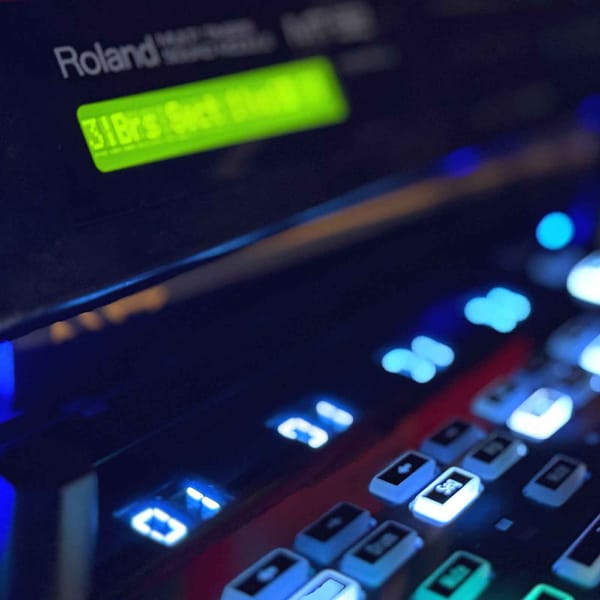
Over the past several weeks, I've been revisiting the old friend which I keep since my childhood - the Roland MT-32. This weird, compromised synthesiser had character, that many early game studios like Sierra, LucasArts and Westwood began bundling with their games OST and hired professional composers like William Goldstein to write specifically for it. What emerged was a sound that defined late-'80s and early-'90s PC gaming.
Space Quest III featured music by Supertramp's Bob Siebenberg. Police Quest evoked Miami Vice - and King's Quest, Monkey Island, Loom, and hundreds of other titles received MT-32 soundtracks that were leagues beyond the PC speaker beeps or FM synthesis that most players experienced.
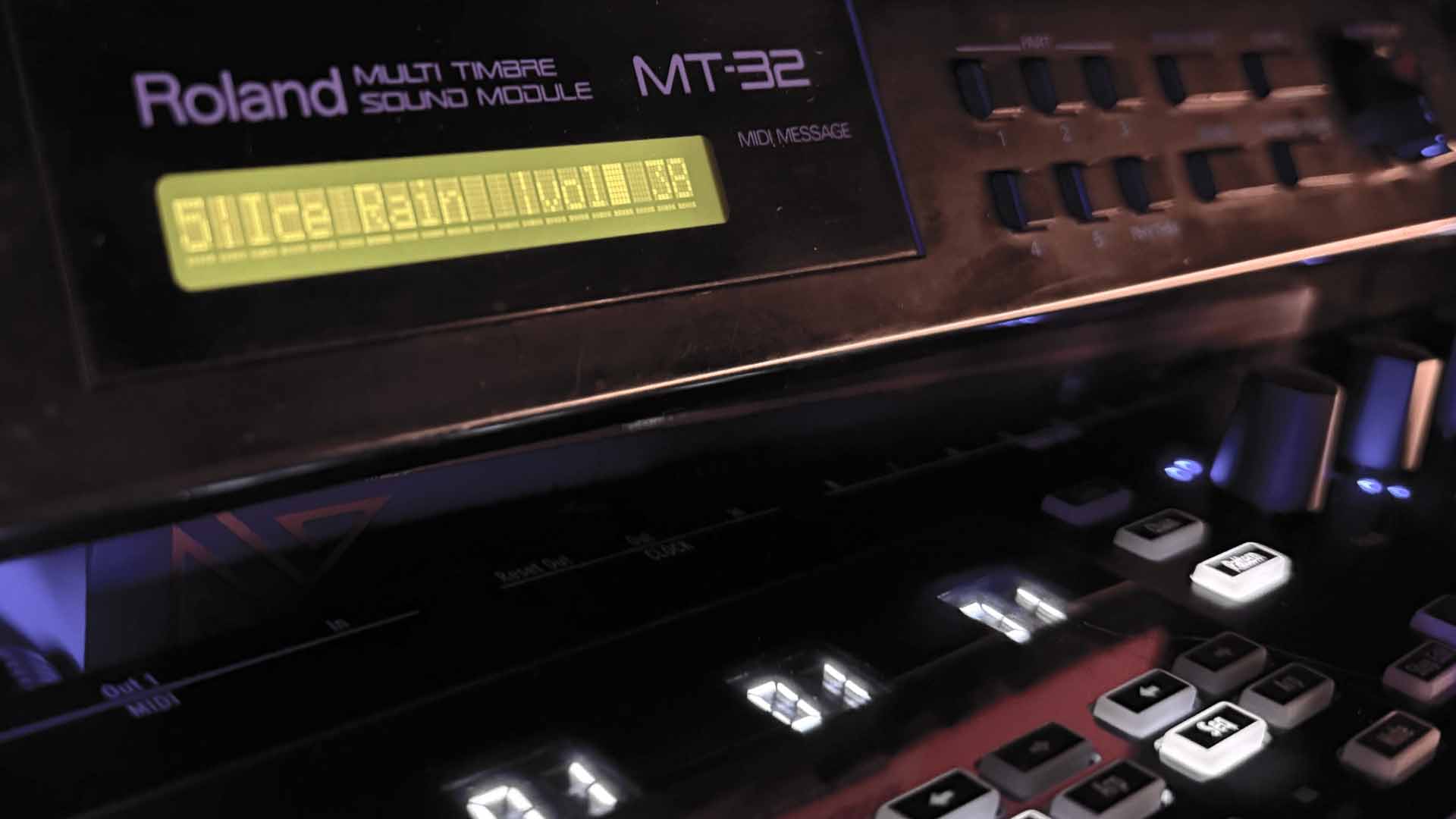
MT-32 democratised decent MIDI synthesis for home users and defined an era of game music, yet it was genuinely flawed - noisy, limited, and dismissed by professional musicians even at release. It's quickly become invaluable for playing 200+ DOS games as composers intended.
Why many of us bothered to have this sound card addition? Back in the days music played big emphasis on the game atmosphere - graphics and animation possibilities were very limited comparing to today. I could compare the emotions of unlocking great sound with MT-32 to switching Ray Tracing ON in todays gaming - the emotional impact was real. Here is the list of my favourite OSTs I still remember sounding excellent on MT-32:
Sierra and LucasArts games famously printed jokes and meta messages on MT-32 display: Space Quest III shows “Insert Buckazoid!” when it uploads its custom patch set; other titles display game titles, credits, or snarky comments as the intro music starts.
Understanding the MT-32 requires understanding Linear Arithmetic synthesis, Roland's hybrid approach that combined PCM samples with traditional subtractive synthesis. The concept was elegant: use samples for attacks (the pluck of a guitar string, the hammer strike of a piano) and synthesize the sustain phase. This saved ROM space and processing power while theoretically capturing realistic instrument character. Each sound consists of up to four partials, which can use either PCM samples or basic waveforms. These partials run through filters, envelopes (ADSR for amplitude, pitch, and filter), and can employ ring modulation.
Roland made numerous compromises to hit that $695 price point, and they're audible. The DAC is a Burr-Brown PCM54 that technically provides 16-bit output, but the MT-32 actually outputs 15-bit audio. Worse, there's a digital overflow issue: the audio is bit-shifted to improve signal-to-noise ratio, but if the amplitude crosses certain thresholds, you get loud pops and crackles. Every sound played on the MT-32 is accompanied by a noticeable hiss. In dense game music, it blends into the texture.
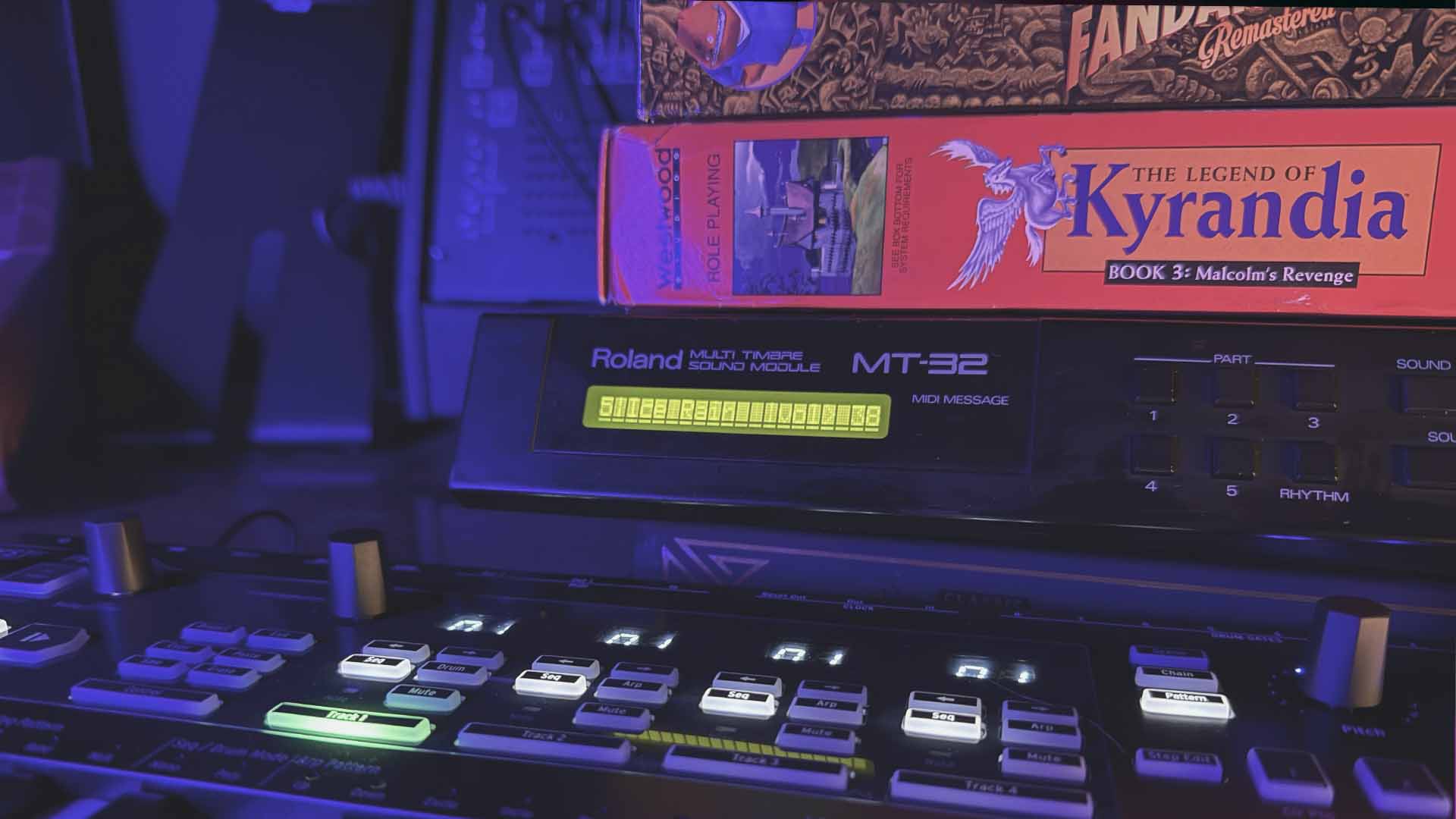
The front panel offers minimal control - just a 20-character LCD, buttons to change parts and select from 128 preset sounds organized into 17 instrument groups, and volume controls. No onboard editing whatsoever. Everything else requires MIDI System Exclusive messages and external editors, most of which are now abandonware or buggy. The preset library emphasizes acoustic instrument emulation: trumpety trumpets, guitary guitars, piano-ish pianos. Around 90 of the 128 presets attempt realism; the remaining 38 are synth sounds like pads and leads. Patches like Soundtrack and Fantasia have genuine character - lush, lo-fi pads and leads that sound distinctly mid-'80s digital but not generic. I have my biases, but these sounds have aged into a certain aesthetic charm.
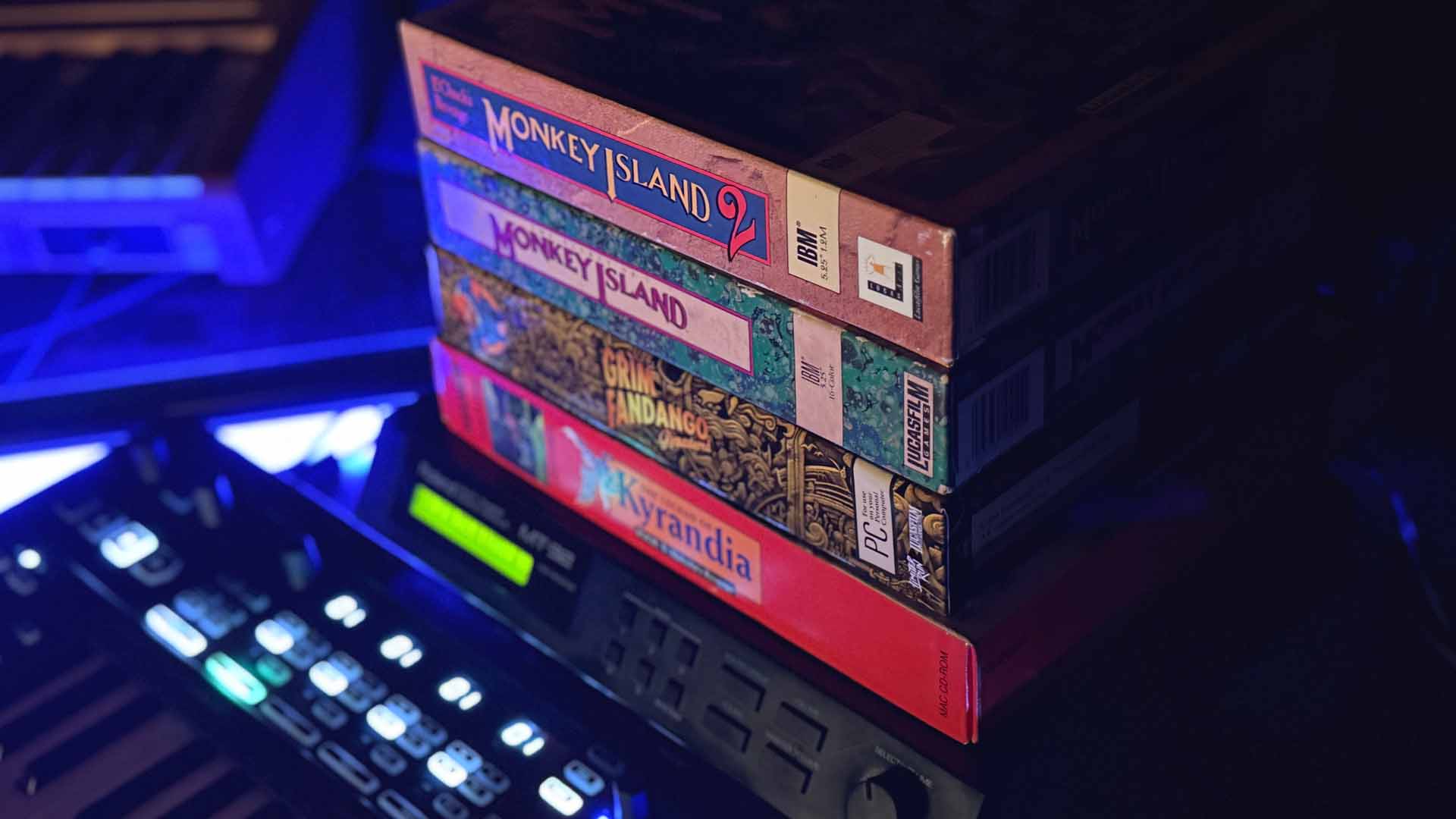
Which brings us to the present, MT-32 occupies a specific creative niche: nostalgic authenticity for indie game development, particularly point-and-click adventures and retro-styled titles: it's the very specific texture of late-'80s/early-'90s computer gaming. Consider what made classic adventure game soundtracks memorable. The Legend of Kyrandia, Monkey Island, Loom - were MIDI files composed specifically for MT-32's quirks and capabilities. Composers like Frank Klepacki understood the instrument's limitations and wrote around them, creating music that felt expansive despite cut polyphony.
For modern indie developers creating point-and-click adventures or pixel art games, the MT-32 sound provides instant period authenticity. It's the aural equivalent of CRT scanlines or pixel art - an aesthetic signifier that immediately communicates this is inspired by that era. But there's a crucial difference: while pixel art can be executed pixel-perfectly in modern tools, the MT-32 sound is inherently tied to its limitations. Those polyphony cutoffs, that noise floor and the way reverb smears across digital artifacts - you can't fully replicate it without understanding the hardware.
Practical approaches for 2025 indie developers include using Munt for composition and testing, potentially recording multiple passes to build denser arrangements than the hardware could play live. The mt32-pi offers a middle ground: genuine hardware behavior without vintage hardware prices and maintenance. Some developers combine MT-32 textures with modern production, using the module as one layer in a hybrid soundtrack.
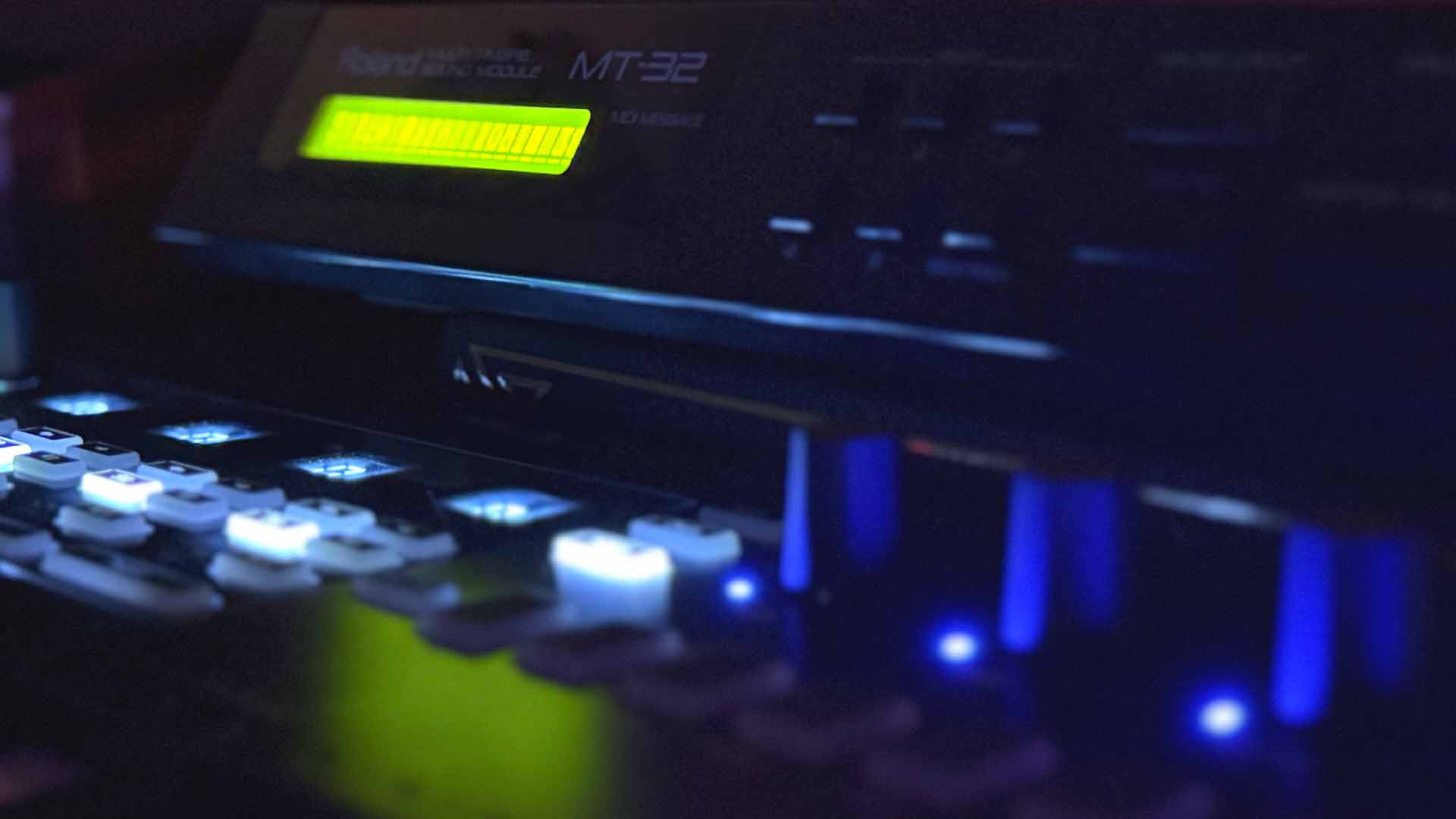
The ScummVM community has kept this workflow alive, with extensive documentation on MT-32 implementation and ROM requirements. Games like Darkside Detective and other modern point-and-click titles have explored retro synth aesthetics, though most lean toward broader "chiptune" sounds rather than specifically MT-32.
Possibly more unexpected is the MT-32's relevance to dungeon synth, a dark ambient subgenre inspired by 1990s black metal keyboard interludes and fantasy RPG soundtracks. Dungeon synth exploded in the 2010s through Bandcamp and bedroom producers creating lo-fi, atmospheric fantasy music - often recorded on whatever cheap hardware they could find.
The MT-32 turns out to be ideal for this aesthetic. The dated samples evoke 1990s DOS RPGs like Ultima 7, Elder Scrolls: Arena, and Darklands - games that we, dungeon synth fans grew up with. Its reverb, while primitive by modern standards, has a characteristic delightfully eighties quality that integrates naturally with the aesthetic. The orchestral presets - strings, brass, choirs - are cheesy enough to evoke 1990s fantasy but not so primitive as to sound like a joke. And critically, the MT-32 is programmable, allowing producers to craft custom patches that enhance the dark ambient soundscapes central to dungeon synth.
Dungeon synth typically features minimalistic arrangements - single melody lines over drone pads - which plays to the MT-32's strengths. Polyphony limitations become irrelevant when you're composing for minimalism. The noise floor adds natural tape hiss without actual tape degradation. Many dungeon synth albums deliberately reduce fidelity through bitcrushing or analog recording; the MT-32 provides period-accurate lo-fi from the source.
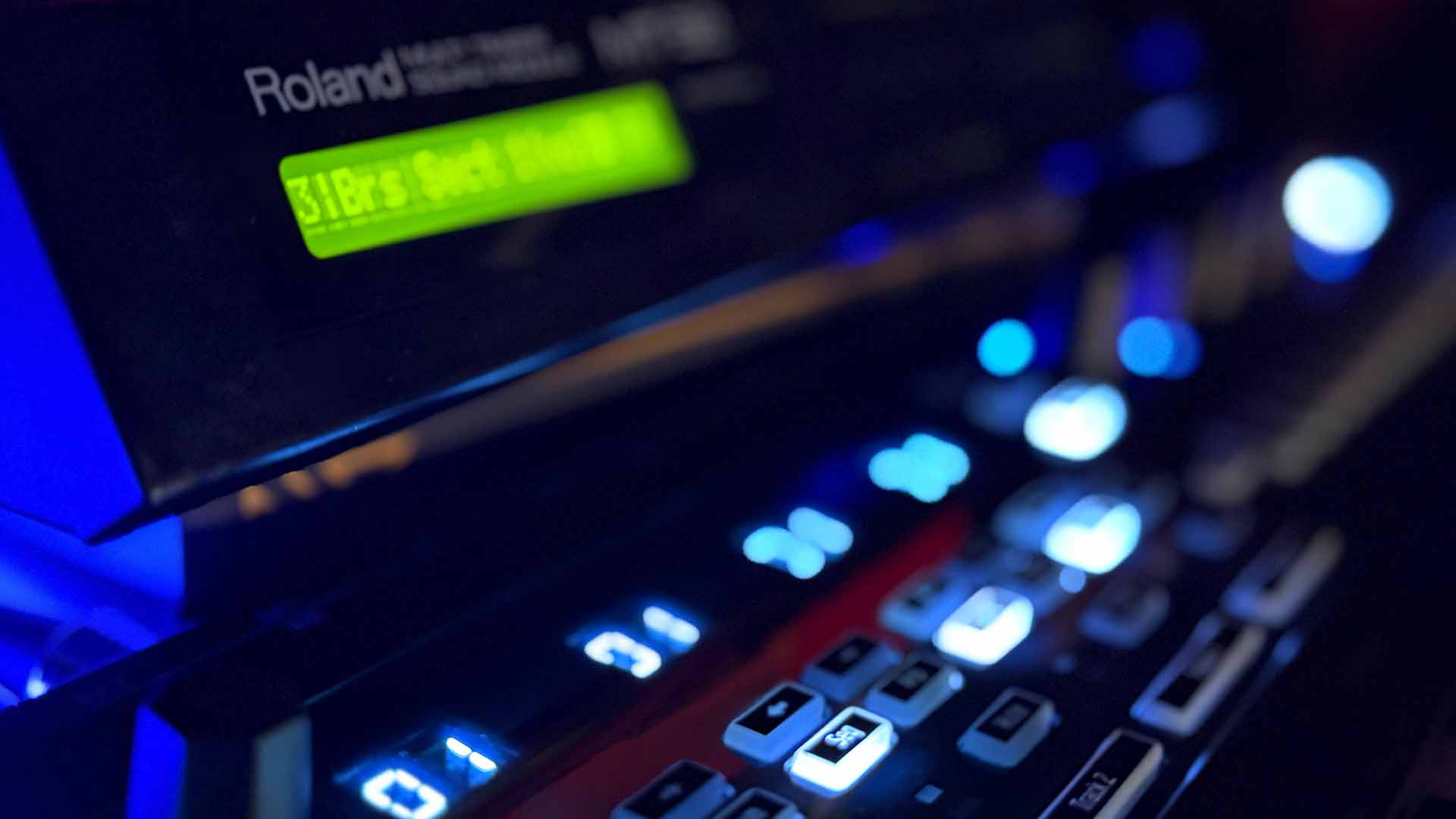
Connecting a modern controller like the Arturia KeyStep Pro (KSP) to a vintage Roland MT-32 is physically simple but functionally tricky because the MT-32 does not follow the standard General MIDI rules we take for granted today. If you plug them in and play, you will likely hear silence. However, this comes not from a protocol difference, but a simple channel mapping mismatch.
Here is the step-by-step fix.
1. The physical connection. The KeyStep Pro has standard 5-pin DIN ports, so you do not need any converters. Connect a standard 5-pin MIDI cable from the MIDI OUT 1 of the KeyStep Pro to the MIDI IN of the Roland MT-32. Note: Do not plug anything into the MT-32’s MIDI OUT/THRU, at least my unit's MIDI doesn't behave stable in such scenario.
2. The silence problem (channel mismatch). By default, the KeyStep Pro sends notes on MIDI Channel 1. By default, the MT-32 ignores Channel 1. Because the MT-32 predates the General MIDI standard (1991), it uses a peculiar channel layout:
3. How to make them talk. You have two options: reconfigure the KeyStep Pro (Recommended) or hack the MT-32.
Option A: Change KeyStep Pro Track Channels (Easiest)
This is the best method because the MT-32 forgets its settings when powered off.
1. On the KeyStep Pro, hold the TRACK button (e.g., Track 1) and turn the main encoder knob.
2. Change the MIDI Channel from 1 to 2. Now playing Track 1 will trigger the MT-32's Part 1 (usually a Bass or Piano sound).
3. Set Track 2 to MIDI Channel 3 (triggers MT-32 Part 2).
4. Set Track 4 (Drum Track) to MIDI Channel 10 (triggers MT-32 Drums).
Option B: Force MT-32 to Listen on Channel 1
You can temporarily force the MT-32 to shift its listening channels down by one (so Part 1 = Channel 1) until you turn it off.
1. Power on the MT-32.
2. Hold the MASTER VOLUME button.
3. While holding Volume, press PART 5 button.
4. Release both, then immediately press PART 1 button.
The MT-32 display should now show parts assigned to Ch 1-8. Your KeyStep's default Channel 1 will now work.
4. Important limitation: "no sound" vs. "wrong sound"
The MT-32 requires SysEx (System Exclusive) data to load custom sounds. A controller like the KeyStep Pro cannot send these complex files.
What this means: You will be limited to the MT-32’s 128 internal presets. You can switch these using the Program Change feature on the KeyStep Pro.
Tip: If you hear "weird" sounds (like a piano that sounds like a synth pluck), that is normal. The MT-32 default presets are very 1987. Without a PC sending a patch dump (like games do), you are stuck with the factory sounds-which is perfect for that raw synthwave/dungeon synth vibe.
--
For those who want to try MT-32 sound without the box: in 2025, you don't need physical hardware to experience the MT-32. The Munt emulator achieves ≥99.9% accuracy, requiring only the copyrighted ROM files (which exist in a gray area of abandonware). Community comparisons between real MT-32s and Munt reveal nearly identical output, with Munt sometimes sounding cleaner due to the absence of hardware noise.