Roland RS-505 Review: Classic String Synthesis
– 10 min read

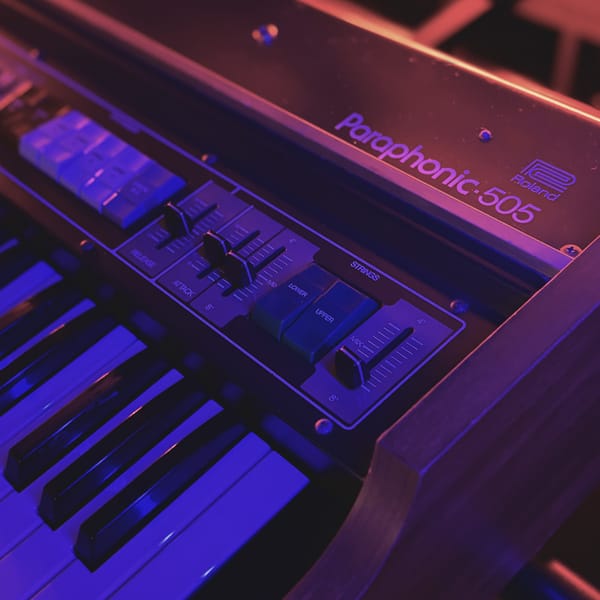
After months of diving into this beauty I've assembled what might be the collection of field notes on Roland's often-overlooked 1978 masterpiece. The RS-505 -marketed as The Analog Orchestra - represents a fascinating crossroads in synthesizer history, and the more I've uncovered about it, the more I've realized how misunderstood and underappreciated this instrument remains and how compelling it is for contemporary electronic music production.
This is the synth that sits well in the mix. Certain separate sounds from RS-505 can sound meh (especially thin strings alone), but it shines when we use full section: the strings occupy the high-frequency spectrum without muddying the midrange, the synth section provides body and movement via its filter and ADSR, and the bass section anchors the low end.
A fascinating technical detail is that RS-505 shares significant internal architecture with the Jupiter-4, Roland's early polyphonic synthesizer released the same year. This connection explains some of the RS-505's sonic characteristics - particularly in the synth section, which uses similar filter and envelope designs to the Jupiter-4, though obviously with significant functional differences.
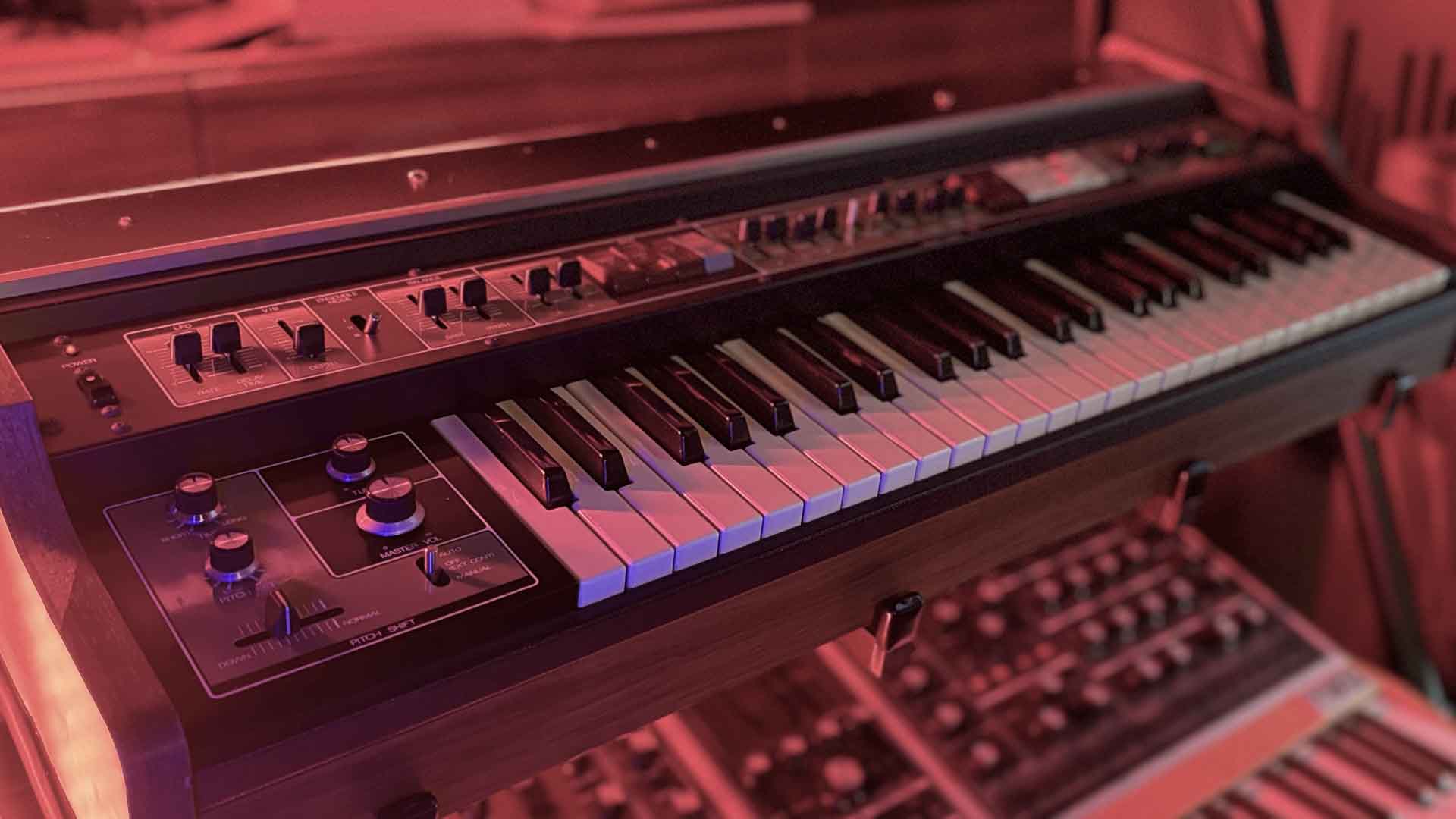
When Roland released this instrument in 1978, they intended paraphonic to describe its ability to make multiple sounds in parallel: strings, bass, and synthesizer sections could all play simultaneously, creating what they envisioned as a one-person orchestra. Terminology evolved, and in contemporary discussions, paraphonic describes instruments with full polyphony but only one articulative structure - one filter, one amplifier - through which all notes pass. The RS-505 happens to be paraphonic in both senses: it offers parallel sound sections and routes multiple notes through shared signal paths.
So, is the RS-505 is "truly" paraphonic? The answer is yes, just in more ways than one.
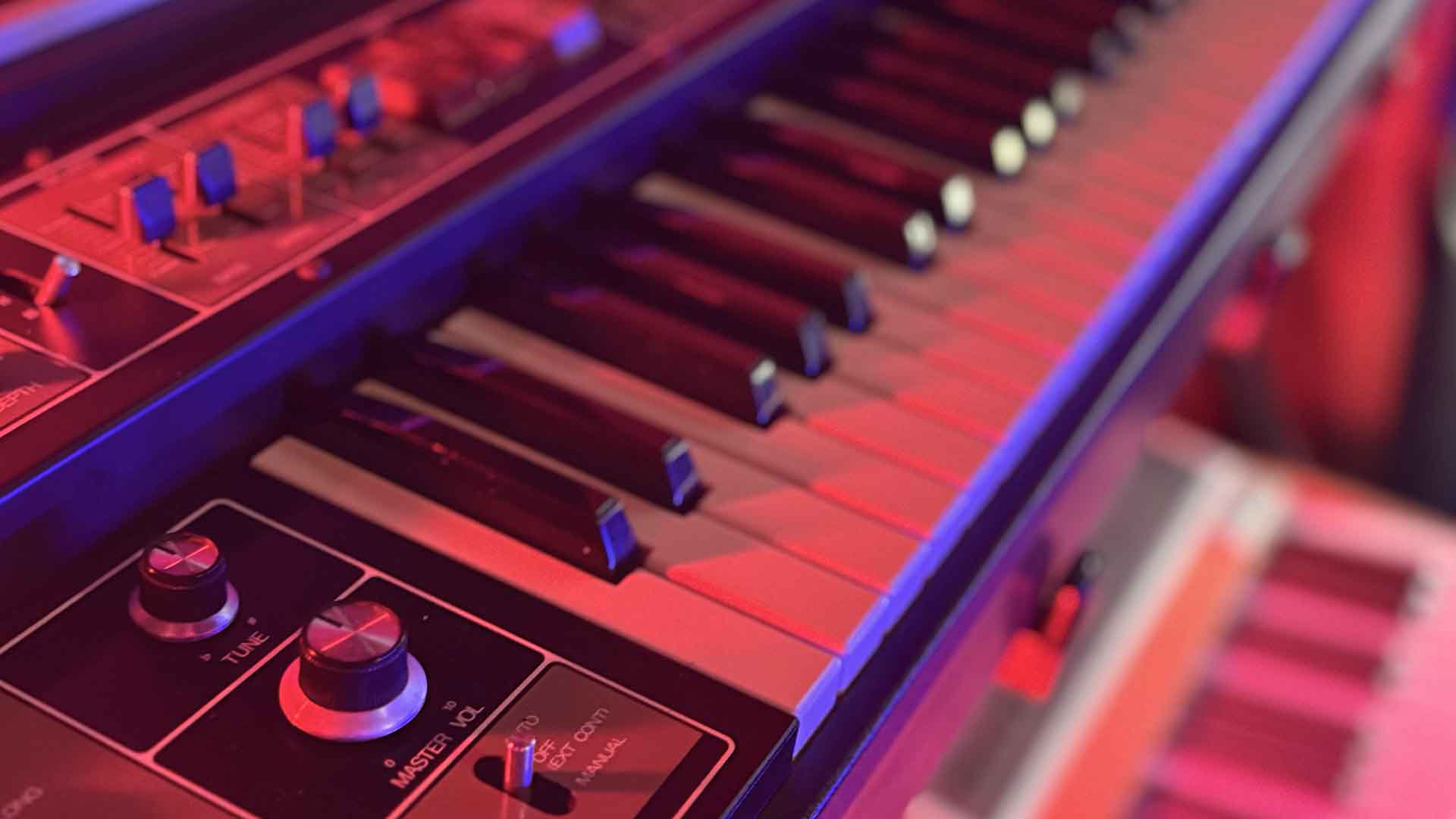
One of the most fascinating discoveries was understanding the RS-505's oscillator architecture. Unlike true analog polysynths with multiple voltage-controlled oscillators, the RS-505 employs a top octave divider (TOD) system borrowed directly from electronic organ technology. A single high-frequency square wave oscillator (running at approximately 2MHz) generates the top octave's twelve notes through a divider chip. These twelve frequencies then cascade through flip-flop dividers to produce lower octaves. As the result we arrive at 49 notes of polyphony without managing 49 separate oscillators or dealing with the tuning nightmare that would have entailed in 1978. All the notes are kept in phase, so there is no drift between octaves. This phase coherence contributes to the RS-505's characteristic sound - a slight sterility compared to true analog polysynths, but also a remarkable consistency and clarity when layering multiple notes.
The TOD architecture also explains why there are no VCOs in this instrument, despite it being labeled an analog synthesizer. Technically, it's an analog signal processor with digitally-derived pitch sources - a hybrid approach that was remarkably cost-effective for its era.
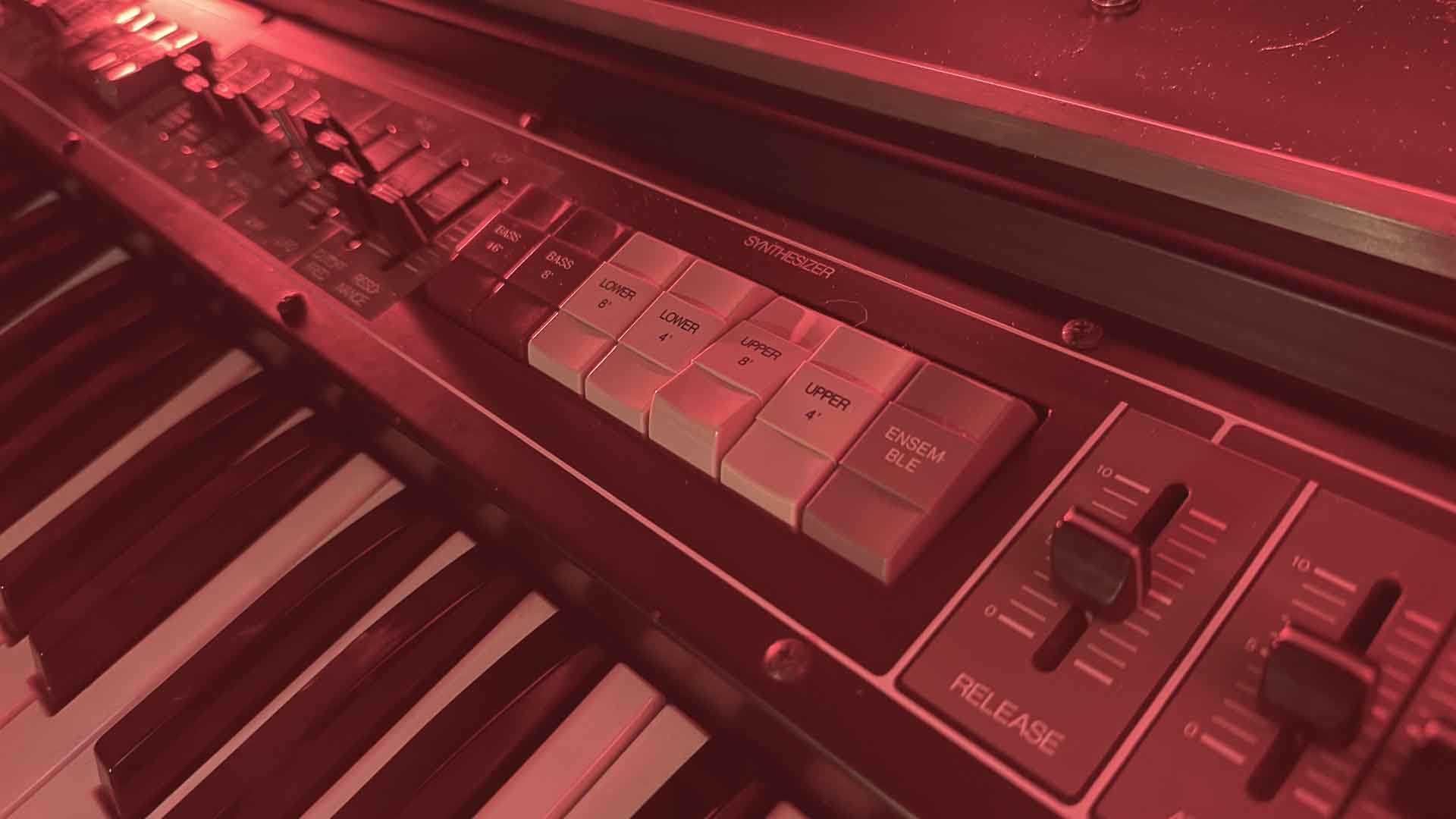
If there's one feature that elevates the RS-505 to legitimate classic, it's the quad-BBD ensemble effect. This circuit board is identical to the one used in the legendary VP-330, creating proper stereo output for great psycho-acoustic effect. Unlike many string machines of the era with mono chorus outputs, the RS-505's four Bucket Brigade Device (BBD) chips generate true stereo width.
The effect offers three modes with progressively more flanging character. Mode 3, the most flanged setting, transforms the bass section into something truly spectacular. Combining the contrabass and cello sounds with the ensemble on Mode 3, then adding the synth section's 16-foot sawtooth creates remarkable texture. What I discovered only after extended use: there's also a trimmer pot on the rear panel for even finer ensemble adjustment. This level of tweakability was unusual for a preset-oriented instrument and speaks to Roland's understanding that the ensemble was the sonic centerpiece.
The feature that transformed how many owners used their RS-505 is the external audio input that allows you to route any signal through that glorious quad-BBD ensemble. The Dimension D - Roland's standalone rack chorus unit - was based on similar BBD principles. This feature takes on special significance for modern production. Imagine running a DI bass guitar, a thin software synth, or even vocals through authentic 1970s BBD processing.
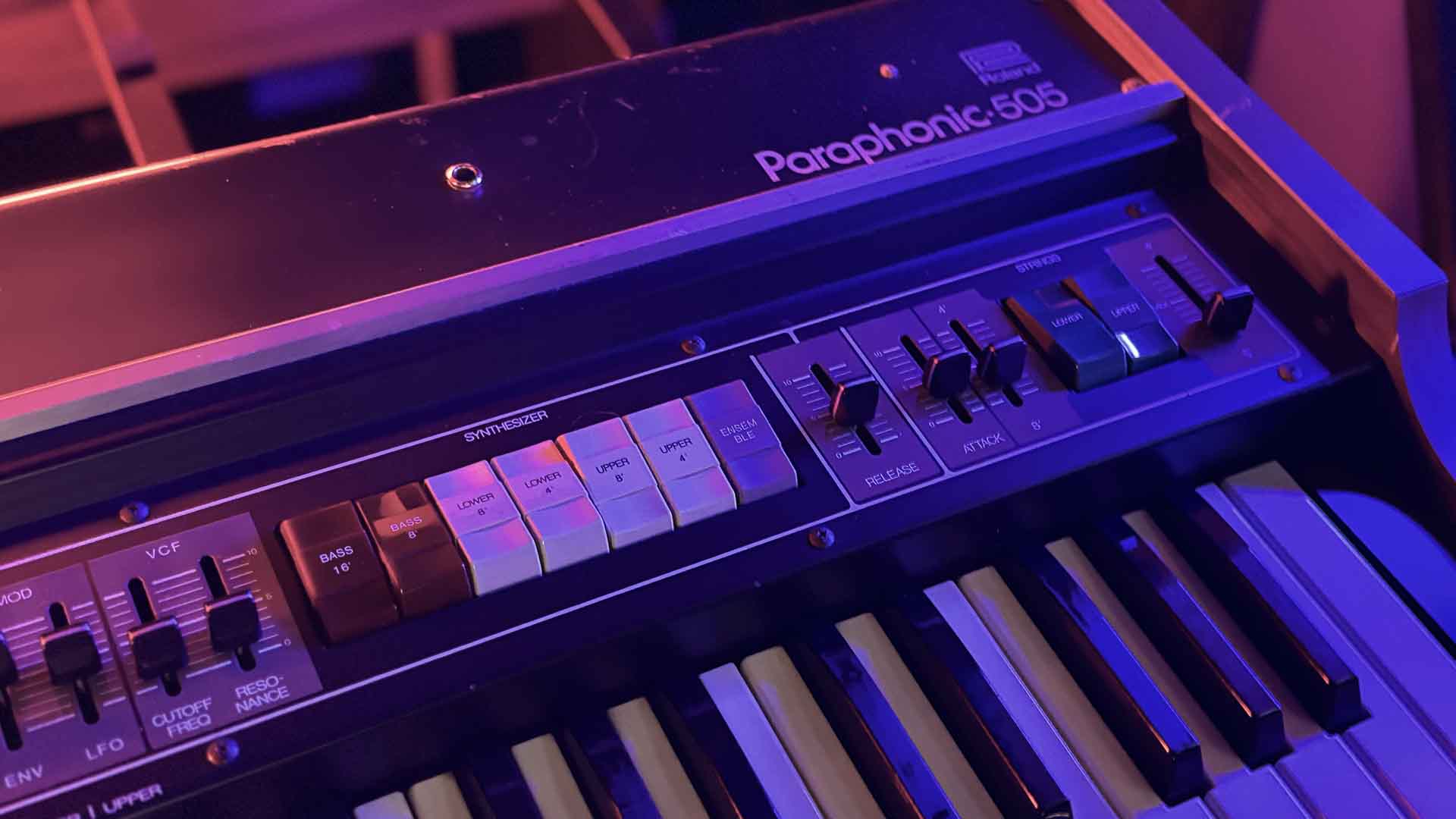
One of my most consistent likes in RS-505 is its bass section. It offers three preset sounds accessed via large red buttons: cello 8, tuba 16, and contrabass 16. Despite their orchestral names, these sound nothing like their acoustic counterparts. They're deep and can perfectly fit in electronic music contexts, especially when multiple bass sounds are combined. I would say its bass section even outshines the strings themselves: the monophonic bass (lowest note priority) combined with its own attack and release envelopes, plus the option to route through that quad-BBD ensemble - and the result is fantastic.
Not everything about the RS-505 is convenient: when all notes share one filter and amplifier, it's not that easy to play consistently - I prefer making many takes and polish in the DAW. One of the examples is if you hold a chord and then play a melody on top, the envelope doesn't re-trigger cleanly for the melody notes - they adopt whatever stage the envelope is currently in from the held chord. My playing technique is not quiet adapted to that.
Another consistent problem is a significant volume drop, that occurs when I route the bass and synth sections through the ensemble effect. It's an intentional design choice related to how the BBD circuit processes audio. The string section always routes through the ensemble and is gain-staged appropriately. But when we engage the ensemble for the other sections, we're effectively splitting the signal, sending part through the BBD chain, and mixing it back. I compensate that in DAW with clip gain, but it's worth knowing if you're tracking this synth live.
But here is the one significant limitation I wish it didn't have is only the synth section has a true voltage-controlled filter. The strings and bass sections lack dedicated filtering beyond fixed tone shaping. The synth section's 24dB low-pass filter with resonance, cutoff, and envelope sensitivity offers the only real timbral sculpting available. This limitation affects how you'd use the RS-505 in modern production contexts - you have to add external filtering (either hardware or a midi-controlled plug-in) for interesting results.
The LFO on the RS-505 primarily serves vibrato duties, with rate and delay time controls. The rate doesn't extend slow enough for genuine long-form modulation effects that became standard on later synthesizers. For contemporary ambient and experimental applications - this limitation also means you'd need to supplement the RS-505 with external modulation sources or DAW automation.
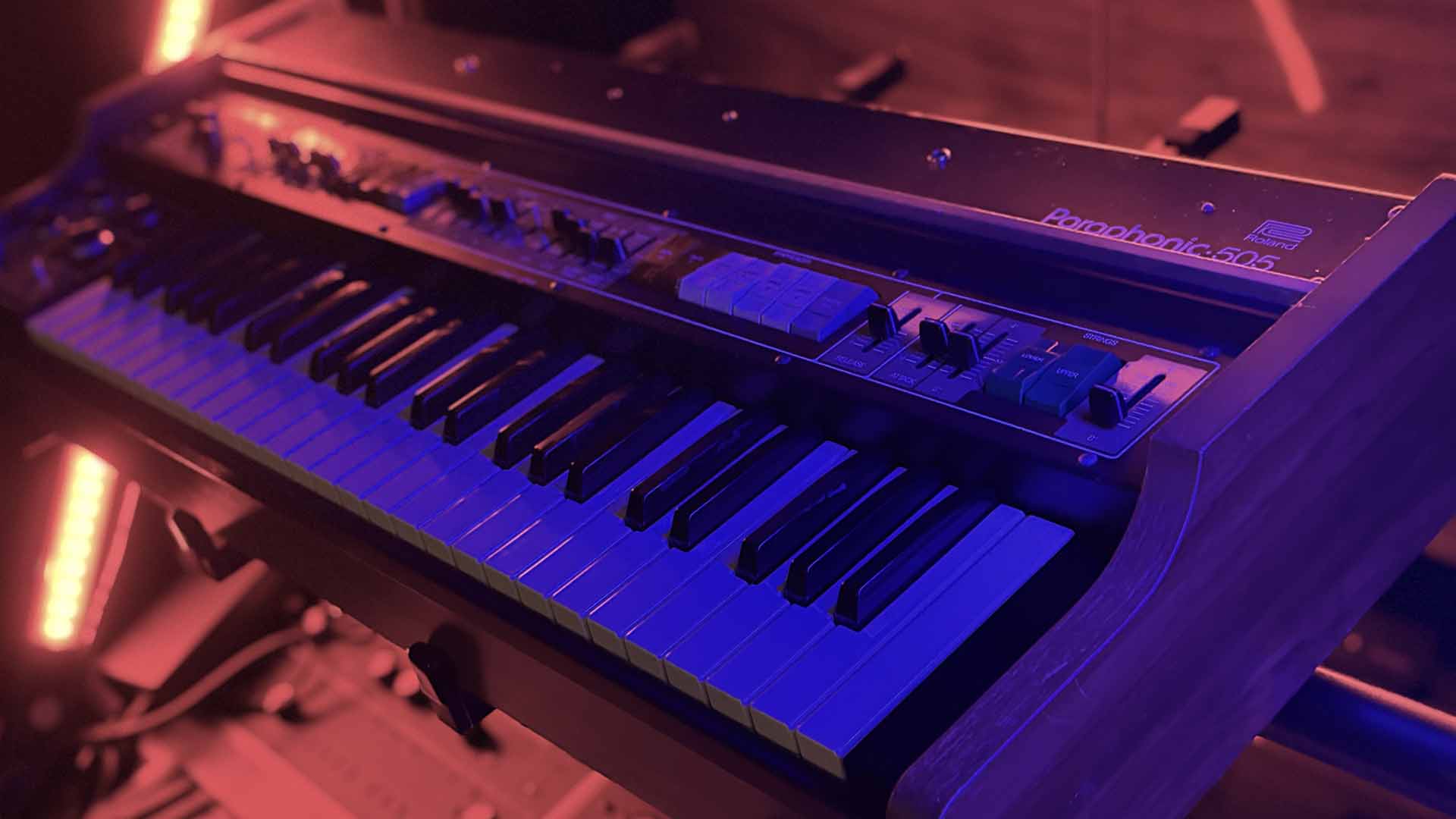
How does the RS-505 function in contemporary progressive rock production? The genre's DNA includes string synthesizers - from Mellotrons to the ARP Soloist used on Genesis's "The Cinema Show" to Rick Wakeman's arsenal. The split keyboard enables a classic prog setup: bass lines in the left hand, chords or melodies in the right. This was keyboard players' bread and butter in the 1970s, and the RS-505 handles it natively.
It's nice to use the string section for sustained pad layers that fill the frequency spectrum without competing with guitar or vocals. The intentionally thin character means they sit in the mix rather than dominating it.
For bass lines, combine the contrabass with the synth section's 16-foot sawtooth, routing both through the ensemble on Mode 3. This creates bass tones with movement and stereo width - particularly effective in instrumental passages where the bass needs to carry both harmonic and rhythmic interest.
The synth section's filter works well for held chords, sweeping pads, and slower melodic passages - all prog rock staples - the filter and ADSR provide sufficient expressiveness.
The quad-BBD ensemble effect is perfect for ambient's emphasis on space and texture. The phase relationships created by four modulated delay lines generate subtle movement that keeps static tones interesting across extended durations. For experimental processing, that external audio input becomes invaluable. Record sounds to tape, vinyl, or digital, then reprocess through the RS-505's ensemble for authentic BBD coloration. The analog noise floor, the frequency response quirks of 1970s BBD chips, and the particular phase relationships of the quad-delay architecture create artifacts impossible to perfectly replicate with plugins.
Ambient production often employs slow-moving pads with minimal harmonic movement. The RS-505's strings, though thin, layer beautifully when you accept their character rather than fighting it. Record multiple passes with slight variations in the 4'/8' mix ratios, creating a dense, slowly-evolving pad from a simple starting point.
The bass section provides sub-harmonic reinforcement for bass drones that anchor spatial compositions. The RS-505's monophonic bass with attack/release controls offers more flexibility than preset organs but less complexity than full synthesizers - a sweet spot for intuitive drone work.
The paraphonic limitations actually benefit certain ambient approaches. The shared envelope creates natural dynamics across chords that sound more organic than perfectly polyphonic articulation. When notes share a filter cutoff, you get interesting interaction effects - some notes mask others, creating subtle phasing as harmonics beat against each other.
Dungeon synth - the lo-fi, fantasy-themed ambient genre inspired by black metal interludes and medieval music - seems almost designed for the RS-505. The genre emphasizes darker timbres: the RS-505's synth section with the filter swept down creates exactly this aesthetic. Use the 8' and 4' sawtooth oscillators together, close the filter cutoff to remove high frequencies, add moderate resonance for slight harmonic emphasis, and set a slow attack time on the ADSR.
String sounds in dungeon synth need to evoke orchestral samples from old Casio keyboards or early digital samplers - intentionally "fake" sounding. The RS-505's thin, obviously synthetic strings fit this aesthetic perfectly. They sound like what they are: 1970s electronic approximations of orchestral instruments.
For bass, dungeon synth often uses simple, sustained bass notes that hold harmonic foundations while upper registers develop melodic content. The RS-505's monophonic bass with lowest-note priority handles this elegantly. Hold a bass note with your left hand while playing melodic figures on the strings or synth sections.
Reverb is crucial in dungeon synth production - the genre aims for the acoustic of castle halls, ancient dungeons, and vast forests. The RS-505's dry outputs allow you to add your own reverb character in post-production. Use long decay times (3-5 seconds), pre-delay to maintain articulation, and consider high-pass filtering the reverb to prevent low-end muddiness.
The ensemble effect serves a different purpose here than in other genres. Rather than creating width and movement, engage it subtly to add the slight modulation and pitch variance of worn cassette tapes - a key aesthetic reference for dungeon synth. Mode 1 or 2 will be more appropriate than the heavily flanged Mode 3.
The neo-classical movement represented by Nils Frahm, Hania Rani, and Ólafur Arnalds combines acoustic piano and strings with minimal electronic elements and extensive spatial processing. How does a 1978 string synthesizer fit this aesthetic?
RS-505 is perfect to create as harmonic beds beneath piano or as responses to acoustic elements. These strings excel at this - they provide harmonic information without calling attention to themselves. Layer them quietly beneath acoustic piano recordings for subtle reinforcement. Modern classical crossover doesn't try to fool listeners into thinking software strings are real - the electronic nature is acknowledged as part of the aesthetic. The RS-505's obviously synthetic strings work perfectly. Use them for accompaniment figures that respond to piano melodies.
Frahm often uses sustained bass tones that last for minutes, gradually evolving through filtering or reverb. The RS-505's bass section, recorded at multiple dynamic levels and layered, creates exactly that evolving drones that provide harmonic grounding without overwhelming delicate piano work.
The external audio input opens intriguing possibilities. Route recorded piano through the RS-505's ensemble, then blend it subtly with the dry piano signal. This creates the slight detuning and chorusing that tape saturation might provide, adding warmth and dimension to digital piano recordings.
Counterpoint between sections is a natural method here: use the split keyboard to create dialogues - bass ostinatos in the left hand, string responses in the right. This mirrors the conversational quality between piano and electronics and paraphonic envelope behaviour actually suits here well. The shared filter creates interdependence between notes - they affect each other, creating organic dynamics similar to string players responding to each other's phrasing. This is far more musical than perfectly isolated polyphonic voices for neo-classical applications.
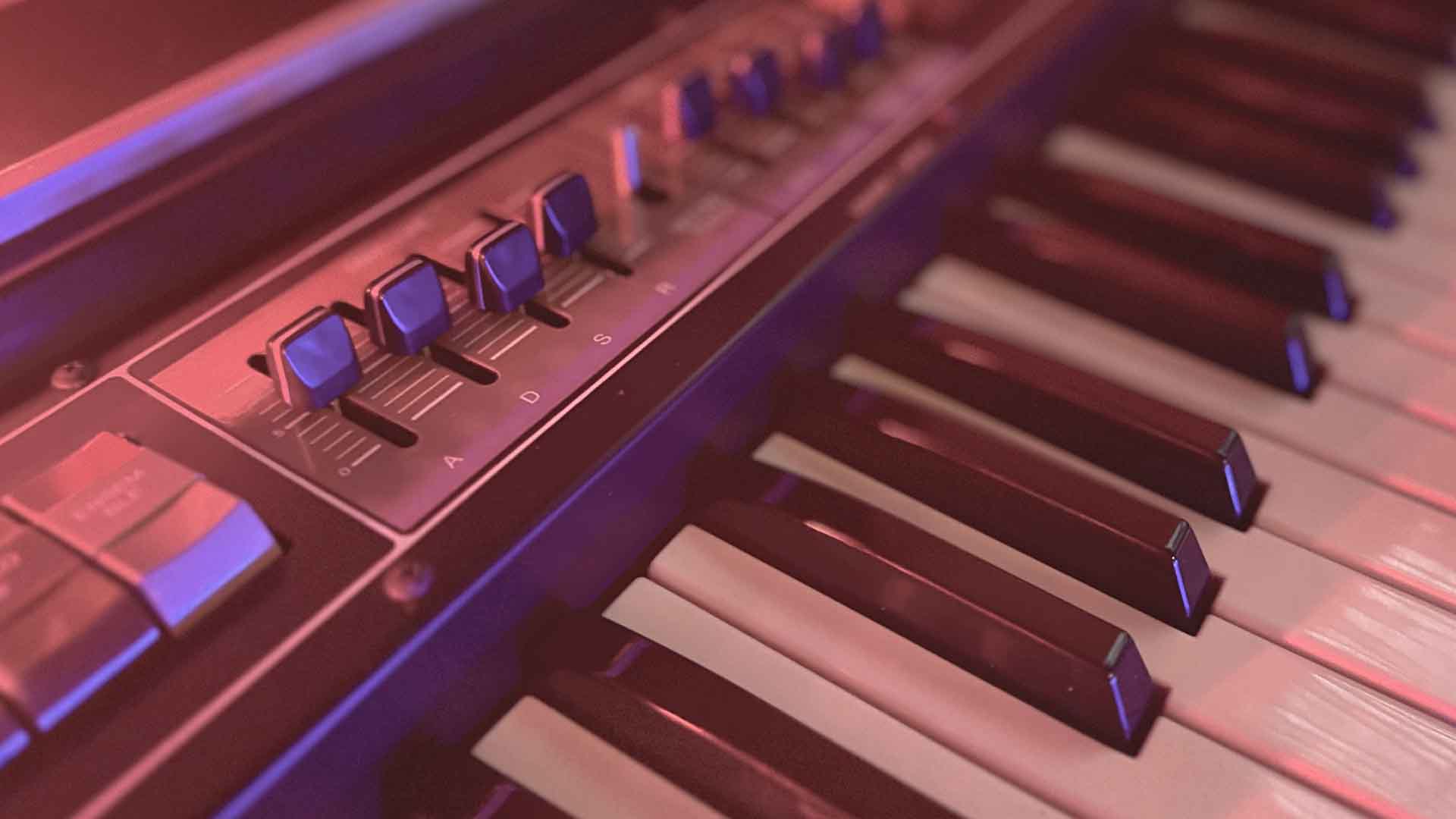
The Roland RS-505 Paraphonic is a specialist instrument that rewards understanding, by no means a swiss-army knife. It's a focused tool that, in the right hands and for the right applications, produces sounds that remain difficult to replicate with modern equipment.
The maintenance requirements are real - expect to budget for recapping if you find an unmaintained unit. And also factor in bi-annual maintenance - it's full of aged components that unfortunately fail. At the moment I write this post, my unit stopped turning on - although I recorded the demo song with it over last weekend. You never know what would be your last performance on the vintage instrument - sad reality of the hardware sunset age.